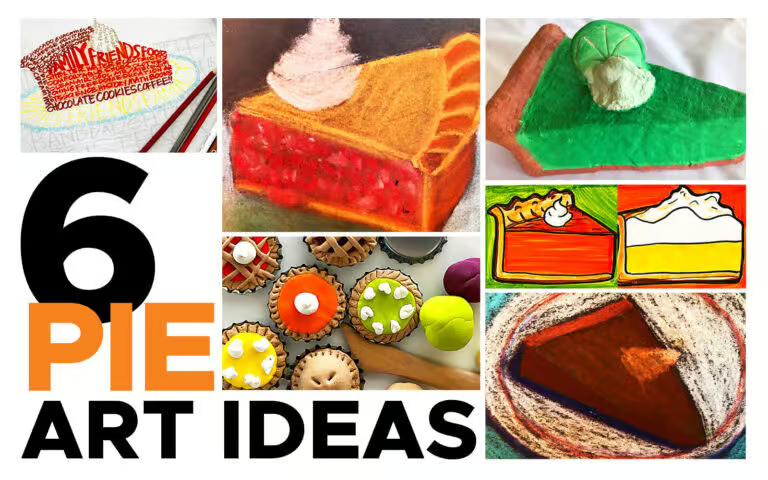
Here are six fun Pie Art Ideas that are perfect art projects for Thanksgiving, Pie Day or anytime you want some colorful, delicious-looking art. These are great for grades 4–8 and combine art history, a variety of mediums, and plenty of creative fun!
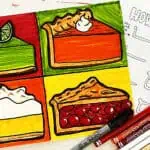
Pop Art Pie Drawing Inspired by Andy Warhol
Andy Warhol was a leading Pop Art artist who transformed everyday objects and popular culture into bold, colorful artwork. His use of repetition and unexpected color combinations makes him the perfect inspiration for a Pop Art pie drawing. My students fold a piece of paper into fourths and draw four different slices of pie either as a guided drawing, bu following my video tutorial or using a step-by-step handout I created. After using a Sharpie to outline the drawings, students then use a limited color palette of 4-5 colors to add colors to the pie and negative space with markers. I encourage my students to experiment with realistic or unexpected color combinations inspired by Warhol’s bold style. This lesson is a great way to explore color schemes, unity, and how repetition can turn an everyday object into an exciting work of art.
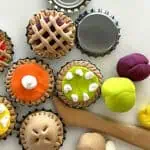
Mini Pie Sculptures Inspired by Shay Aaron
Shay Aaron is an Israeli artist known for creating incredibly detailed miniature food sculptures. His tiny, realistic creations inspire students to explore scale, texture, and three-dimensional form. My students create tiny, realistic pie sculptures using Model Magic and bottle caps. I teach them how to tint the white Model Magic with markers to create a pie crust color. They roll a marble sized ball of this color and press it into the bottle cap to create the crust. Next, they mix colors to create the color of the pie. Finally, they can roll thin coil to make lattice crust, whipped cream or the topping of their choice. This lesson introduces scale, three-dimensional form, and craftsmanship. These miniature pies look good enough to eat!
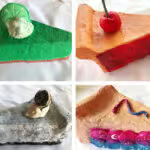
Pie Sculpture Inspired by Claes Oldenburg
Claes Oldenburg was a Swedish-born American sculptor known for creating oversized sculptures of everyday objects. His playful approach to ordinary objects encourages students to think BIG and explore sculpture in unexpected ways. My students construct their own three-dimensional pie using cardboard and tape to create the armature, Next, we cover the armature with 2 layers of plaster craft. The plaster craft can also be used to create crust. I instruct my students to use acrylic paint to paint a base coat, then use sponges and dry brush techniques to create texture on the pie. Lastly, students sculpt additional details like lime wedges, cherries and whipped cream with Model Magic and paint the pieces once they have dried overnight. I love this lesson because students get to experiment with sculpture techniques, textures, and creative problem-solving to make their pies truly unique.
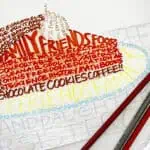
Micrography Pie Inspired by Phil Hansen
Phil Hansen is an American artist known for experimenting with unconventional materials and creative techniques. His innovative artwork demonstrates how letters and mark making can be used to create realistic images. My students lightly draw a pie slice then use words of gratitude with different colors to represent the crust, filling, etc. The words are used instead of traditional shading to create a pie drawing. In addition to color, I encourage my students to use text size, spacing, and overlapping to create a variety of values in their drawing. Inspired by Phil Hansen’s innovative approach to art, students explore value, rhythm, and how the size, spacing, and style of text can create light and dark areas. I especially love the opportunity to have students incorporate things they are thankful for into their artwork!
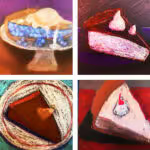
Oil Pastel Pie Drawing Inspired by Wayne Thiebaud
Wayne Thiebaud was an American painter famous for his colorful paintings of cakes, pies, pastries, and other everyday treats. His use of vibrant colors, shadows, and highlights makes his paintings an excellent inspiration for learning how to create the illusion of three-dimensional form with pastels. My students draw a slice of pie using ideas handouts I provide for inspiration. I demonstrate how to work from light to dark and blended oil pastels to create shading, highlights, and cast shadows. Lastly, my students add a table surface and a colorful background. Students learn how to create the illusion of three-dimensional forms while exploring color and texture.
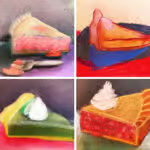
Chalk Pastel Pie Drawing Inspired by Wayne Thiebaud
My students create a pie drawing on black paper using chalk pastels. Like the oil pastels, they layer light to dark colors and practice blending colors, building layers, and creating shadows to make their pie look three-dimensional. Chalk safety is discussed and practiced during this lesson, and the drawings are sprayed with aerosol hair spray as a fixative. This lesson is a wonderful way to compare how different materials can produce different effects while studying the same artist!

I love lessons that combine art history, a variety of materials, and opportunities for students to experiment and discover their own creative ideas. These pie projects are sure to bring a little extra fun to your fall art room.
Thanks for reading! – Trista
Related: Fall Art Lesson Ideas
Check out my Seasonal Lesson Ideas for more posts like this.
If you liked this Pie Art Ideas post, please subscribe by clicking here.