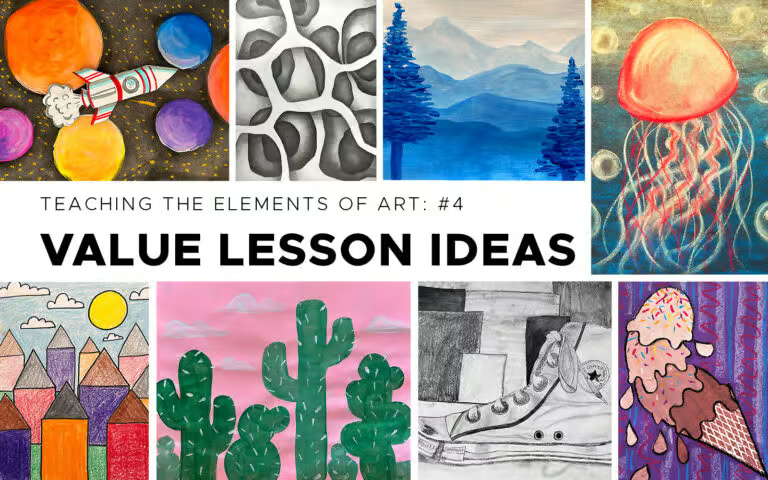
Here are some of my favorite Value Art lessons. Value, one of the Elements of Art, is an important building block of art. It is a great way to teach students how to create the illusion of depth and create a 3D form using highlights and shadows with shading and mixing tints and shades with paint. My elementary-geared ideas are first, with a few ideas for grades 5+ at the end.

Value House
This is a great introduction to value for young artists. With a guided drawing, I demonstrate how to draw overlapping houses. We talk about space and how colors appear lighter in value as they are farther away. I demonstrate how to use more pressure to create dark values and less pressure to create lighter values for houses in the distance. My 1st grade artists love how realistic the drawing becomes.

Value Gems
My 4th grade artists love this watercolor lesson. I provide my students with a step-by-step handout breaking down the steps of drawing four different faceted gemstones. After filling the page with large gemstones, students fill each gem with different values of one color. They practice adding different amounts of water to create lighter and darker values. Lastly, students fill the negative space around the gems with black to camouflage any drips or paint around the gems.
Value Universe
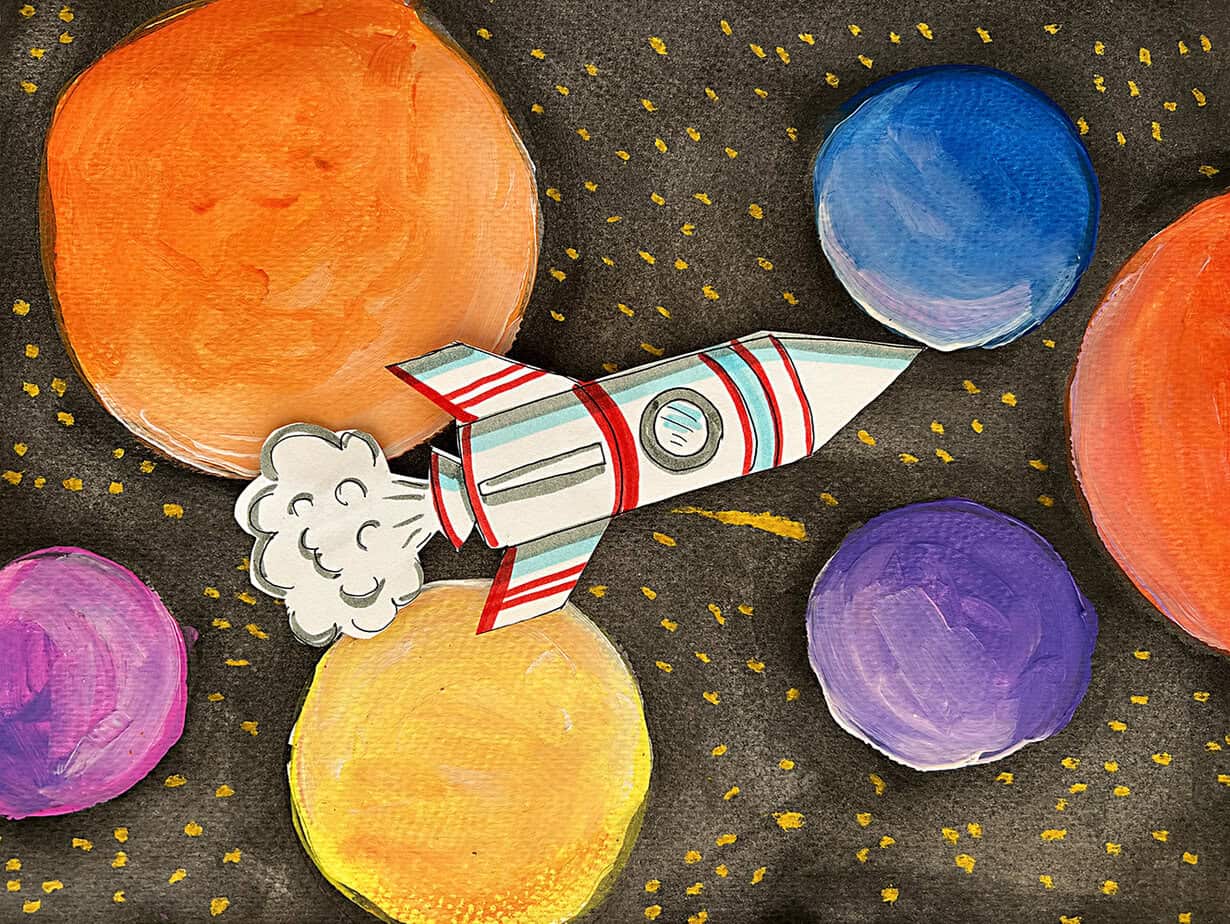
This is such a fun multimedia lesson. I provide my students with lids in various sizes to trace for planets. Students then use yellow oil pastels or crayon to fill the negative space with stars. Next, black watercolor resist is used to illuminate the stars in the black sky. Finally, the planets are painted with value. I demonstrate how to paint the circle with any color and then blend white on one side of the planet to create the illusion of a sphere while the paint is still wet. Students use the sun as a light source to keep the highlights and shadows consistent. Lastly, if desired, students add a space shuttle or rocket to their value universe.
Value Cup
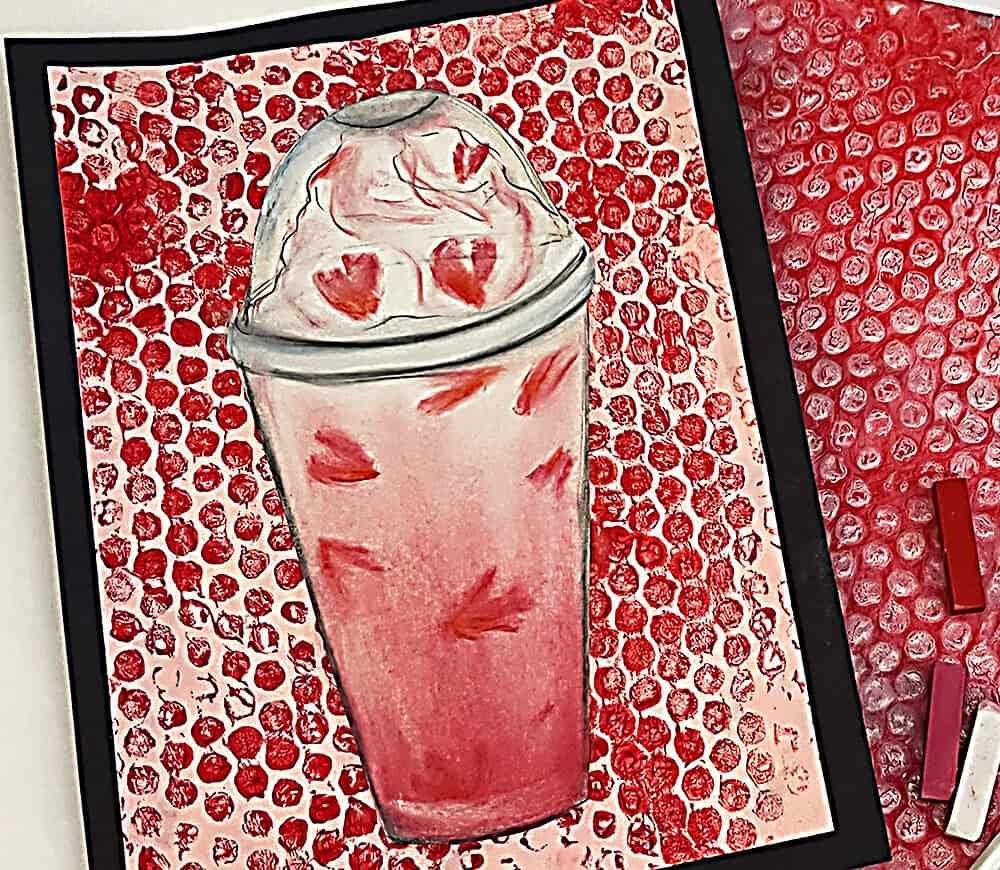
This is such a fun chalk lesson. My students use pencil to sketch a large cup with a lid. Next, they begin filling the cup with white chalk and gradually add one color to the cup. They start at one end creating a value range of dark to light. Next, students add fruit pieces to create contrast of a pure color. Finally, they cut the cup from the paper and glue it to a bubble wrap printed paper to create a fun background. My students love the variety of materials used in this lesson.

Value Cacti
This is an easy lesson for Kindergarten. They mix white and green to create a variety of value of one color. I make a tray of paint with different ratios of paint colors, and they take turns mixing the colors. The excitement is contagious. The group uses round sponge brushes to paint simple cacti on a piece of pink construction paper. Lastly, they use white paint and cardboard to stamp thorns on their cacti and clouds in the sky.

Value Jellyfish
Another fun chalk pastel lesson. I demonstrate how to blend white and blue chalk to create a gradient for a background or the sea behind the jellyfish. Next, we use chalk pastels to draw the dome of a jellyfish and use our fingers to fill in the dome to create a 3D appearance. Next, students draw a variety of wavy and zigzag lines without smudging to create the tentacles of the jellyfish. Lastly, circles are drawn and smudged to create spheres that resemble bubbles in the negative space around the jellyfish. Glares are added last to create the illusion of 3D objects.

Value Landscape
This is the perfect lesson to teach atmospheric perspective. I like to show images of the Blue Ridge Parkway to show students how colors are muted in the distance and more vivid closer to the viewer. I provide each student with a small cup of white paint. Students gradually add a small amount of a pure color to the white paint to create the lightest value. They use this to paint the sky. Next, they add more pure color to make a darker value and paint the horizon line. They continue adding more of the pure color to create a background, middle ground and foreground. The results are stunning, and it can be done in one class period.

Value Cone
This lesson uses the same idea as the value landscape. Student divide their paper into fourths and paint each section a different value of one color. They begin with the lightest value and gradually add more. Once the paper is dry, students cut ice cream scoops from the paper. They stack the scoops on top of one another and glue onto a printed cone. Sprinkles can be added with crayon, paint or construction paper. This is a fun mixed media collage for young and older students.
All eight of the above ideas are included in my Elementary Value Art Lessons bundle, available here.
–
VALUE ART LESSONS FOR OLDER STUDENTS

Value Layers
This lesson is better suited for middle school or high school students. This pencil drawing art lesson will teach students about basic drawing techniques and tools. Students will learn how to create value while creating the illusion of depth in their drawing. They use an Ebony drawing pencil, tortillon and an eraser to create smooth gradients and apply pressure to create a value scale in their artwork. Students draw overlapping shapes to create the illusion of layers of paper with holes, the results are very impressive! Complete Lesson Plan available here.
Observational Drawing Value Shoe
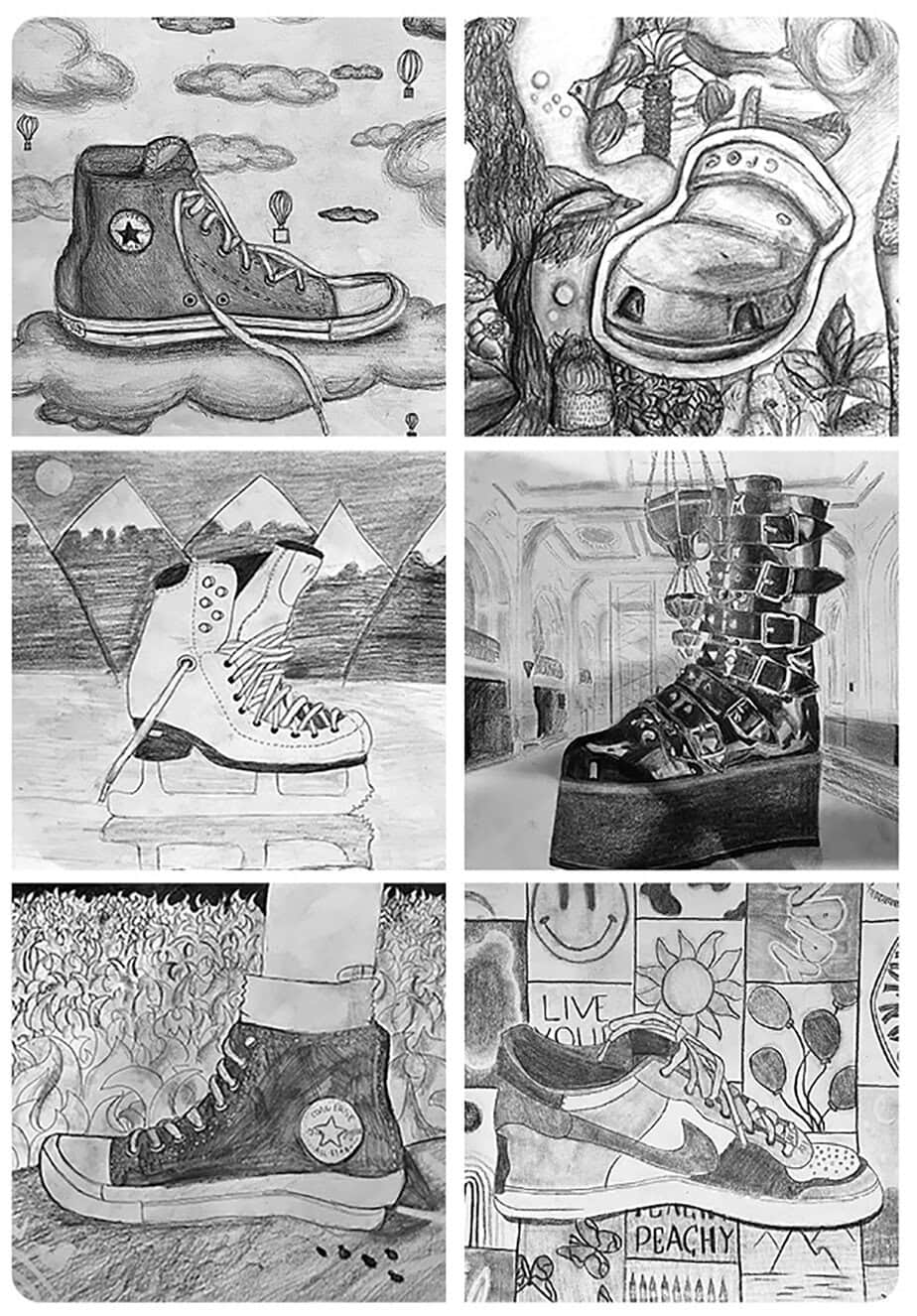
This lesson is also great for middle school students. Students draw a contour line drawing of their shoe, taking visual measurements and looking for flaws and details to make it lifelike. Next, they use a pencil to create a 3D shoe drawing with texture, contrast and a light source. Students create smooth gradients and apply pressure to create a value scale in their artwork. Lastly, students will add a creative background, answering the question “in what bizarre place did you find this shoe?”. This is such an engaging lesson, and my students are always to proud of the final outcome. Lesson Plan available here.
Thanks for reading! – Trista
Related Posts:
Check out my Elements of Art Lessons and Ideas Page for posts like this.
How to Teach the Elements of Art
If you liked this Value Art Lessons post, please subscribe by clicking here.