Here are my nine easy, classroom-tested art teacher tips to keep art students engaged and creating with purpose. It can feel like a balancing act with short attention spans and the ebb and flow of creativity but with these strategies, I turn curiosity into engagement and help my students feel excited about both the process and the learning behind it.
#1. Encourage Collaboration and Conversation
My students work at large tables where they can talk, share, collaborate, and help one another. In addition to the natural collaboration that happens on any given day, I use partner critiques and peer evaluation. I am also a huge fan of collaborative art. My students love working in small groups or with a partner to create a work of art. Collaborative art lessons tend to be their favorite lessons, especially if they get to choose their partner. Lastly, we do a lot of sharing and collaborative brainstorming at the beginning of lessons. I never expect my students to instantly come up with a creative idea. Talking about art helps students process ideas, build vocabulary, and learn from one another.
#2. Routine
Engagement starts with routine. My students walk in the door, get their binder loaded with weekly bell work and are working by the time the bell rings. My students work independently the first 5 minutes of every class on bellwork that I created to expose them to a variety of artists, art genres, art careers, technical skills, art vocabulary, creativity prompts, reflection, and art criticism. I photocopy their pages for the year, 3-hole punch them and load them into their binders at the beginning of the semester or school year. Each day of the week is a different kind of prompt:
- Mindful Monday: Quotes, lesson reflection, goal setting, work habits
- Technique Tuesday: Drawing skills and techniques
- Wise Wednesday: Artist biographies, genres/ movements, art careers
- Thinking Thursday: Creativity exercises
- Focus Friday: Art criticism (featuring Weekly Artwork)
These low-pressure activities boost confidence, keep energy high, while keeping my students engaged in art activities. My 36 Weeks of Bellwork are available here.

#3. Give Students Meaningful Choices
My students always seem most engaged in their learning when they are interested in the subject and medium we are using. By allowing my students to choose their subject matter, art mediums or the next lesson they feel ownership in their work. These small choices are some of the strongest motivators. Whenever possible, I keep my lessons open-ended and keep my students involved in the decision making of their learning, which leads to a deeper investment in their learning.
#4. Focus on Process, Not Just Product
Especially with older elementary students or middle school artists, I shift the emphasis from the final art piece to the journey. My students complete a reflection at the end of every lesson. In doing so, they can really break down what they learned in their art production, what they tried, how they failed, or what they would do differently. I often remind them that this might be the first time using the given medium and not to expect perfection. Instead, I give them praise and feedback on their risk-taking, problem-solving, experimentation, and reflection. This approach reduces fear of failure and encourages students to try new techniques, keeping them engaged with new mediums, techniques, and subject matter.
#5. Use Visual Hooks and Artist Stories
My students love to debate art, critique art or hear shocking art stories. The art world is full of surprising artwork. Many times, just having students guess the value of an artwork gets them engaged in the artwork we are learning about. I always include “fun facts” about the artist I am introducing to my students. Storytelling humanizes art and helps students connect to artists and movements.
#6. Have Early Finisher Activities Ready
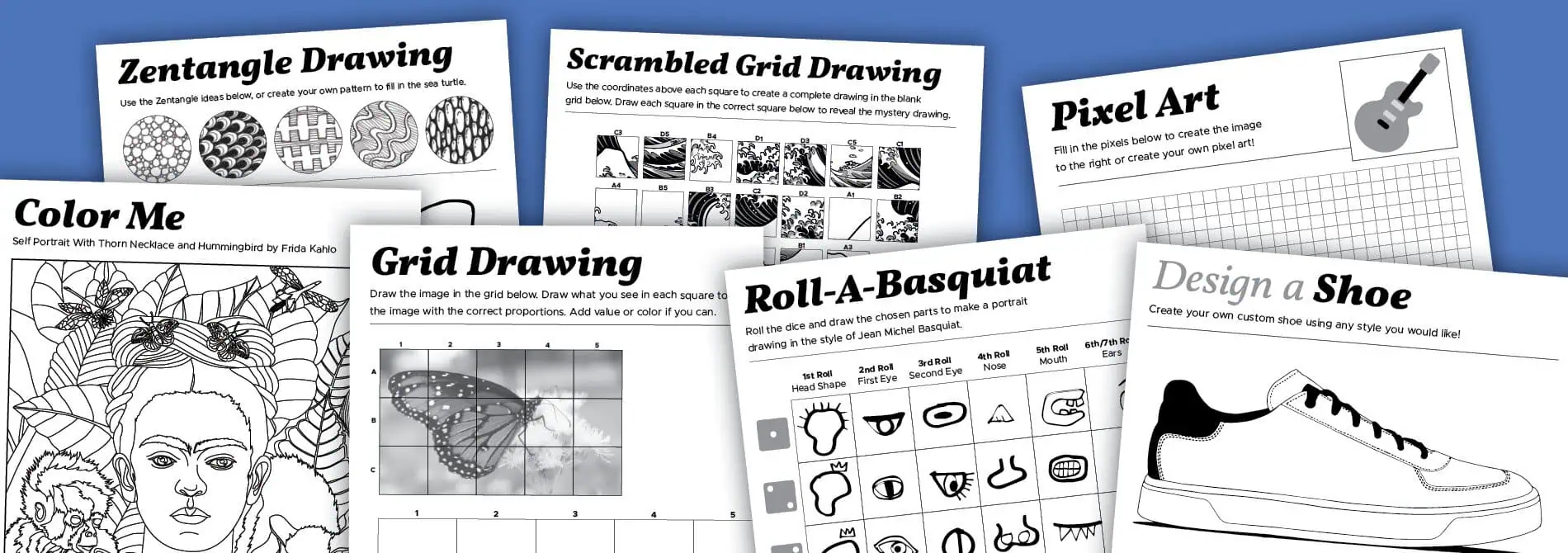
One of the most distracting things for students working on an art project is having other students who are finished with theirs that are talking, goofing off or just being disruptive. This is why I created 50 pages of early finisher activities that I have printed and quickly provide to students so that they stay busy. I designed them be things students would find fun to do so they don’t seem like a punishment. I included things like ‘Finish the Drawing’, ‘Design A…’, and ‘Grid Drawings’. My 50 Pages of Early Finisher Activities is available here.
#7. Model Curiosity and Creativity
I learned the importance of enthusiasm very early in my career. If I am excited about their artwork or the lesson, they find it more exciting. I create with my students when possible and share my own creative struggles. I love when they can see me fail, and I will be the first to admit it. It is healthy for my students to see me experimenting and learning; they feel safer doing the same.
#8. Connect Art to Their World
Pop culture and media are a big part of any child’s world. If possible, I will introduce my students to artists that are relevant now or incorporate the latest trends into the themes of their artwork. In addition, middle school students are interested in social issues and are starting to create their own voices. Allowing students to create artwork that is expressive of their personal interests and experiences keeps engagement high. When students see art as a way to respond to the world around them, it becomes more than an assignment—it becomes a voice.
#9. Celebrate Growth, Not Comparison
As I stated above, I give my students space to think and talk about their artwork. We do this through artist statements, exit slips, peer feedback, and critiques. I believe reflection helps students recognize their growth and reinforces that their ideas matter. In addition, I display their artwork, celebrate efforts, and highlight individual improvement. When students feel seen for their progress—not compared to others—they stay motivated and confident.
Benefits of Art Room Engagement
Engagement in the art room isn’t always about the art projects—it’s about creating an environment where students feel curious, capable, and connected. When students are given choice, voice, and room to explore, learning naturally follows. Art has the power to engage hearts and minds. With these strategies, your classroom can be a place where creativity thrives every day.
Thanks for reading, Trista
If you liked this Art Teacher Tips to Keep Kids Engaged post, please subscribe by clicking here.
Check out my How To Page for more posts like this.