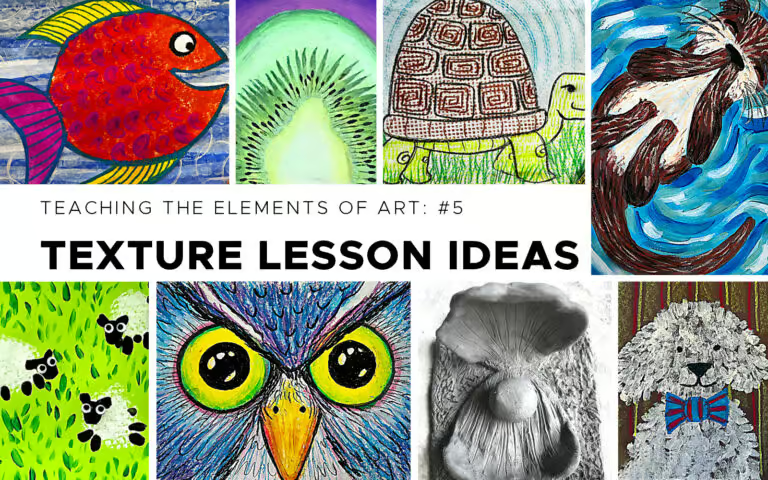
Here are some of my favorite Texture Art lessons. Texture is an important element of art that helps students create both the illusion of touch and the actual tactile feel of surfaces, which help an artwork look more realistic. My elementary-geared ideas are first, with a few ideas for grades 5+ at the end.
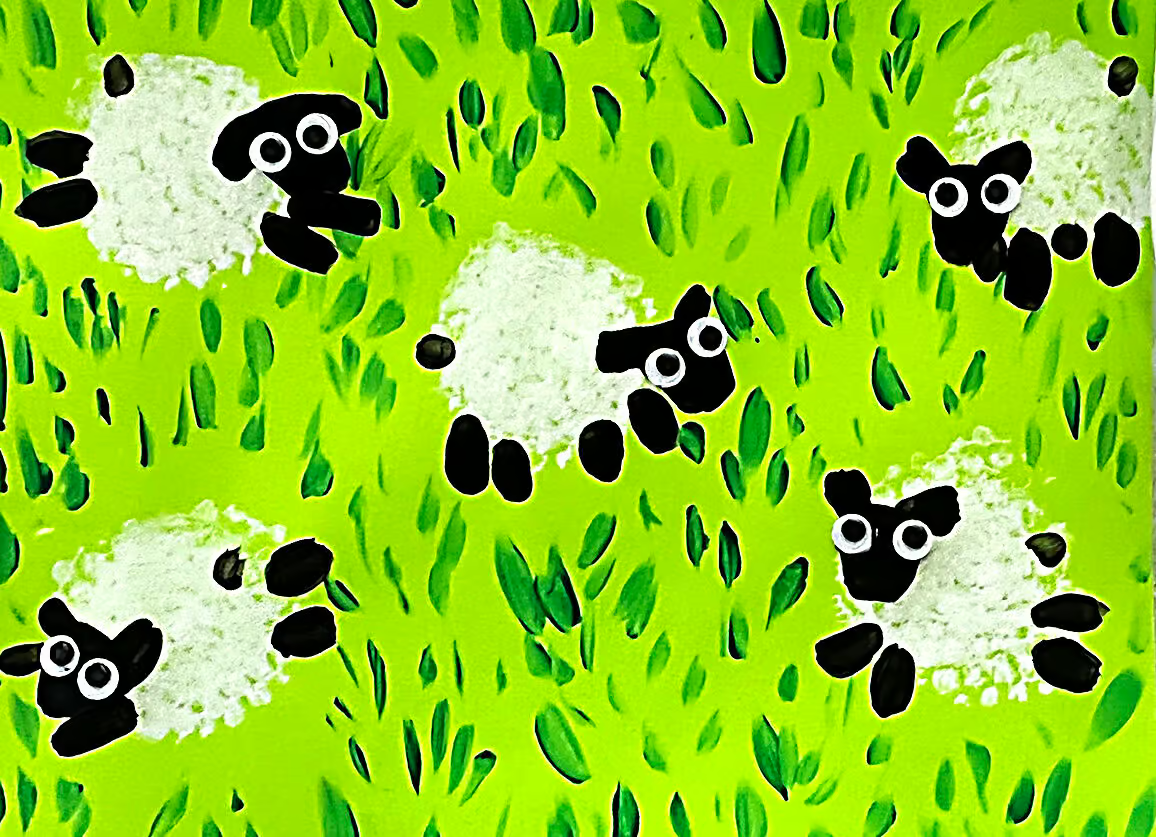
Fluffy Sheep
This is a basic printmaking lesson, perfect for Kindergarten! I use paper tubes and cover one end with bubble wrap. Students dip the bubble wrap in white paint and stamp 6-7 clusters on light green paper. Next, a fine paintbrush is used to add grass texture to the area around the white clusters. Black paint is then used to stamp legs and a head to each of the white clusters to create a field of sheep. Once the paint is dry, googly eyes are glued to the faces to create a pasture of fluffy sheep.

Texture Tortoise
This is a great guided drawing for my Kindergarten or 1st grade artists. We draw the tortoise together or they use the handout I provide to help them with each step. Next, my students outline the drawing with Sharpie. Lastly, we use crayons and texture rubbing plates to create textures for the grass, sky and tortoise. Students find the texture plates so fun to use, and for some reason my Kinders want to color everything at super speed!
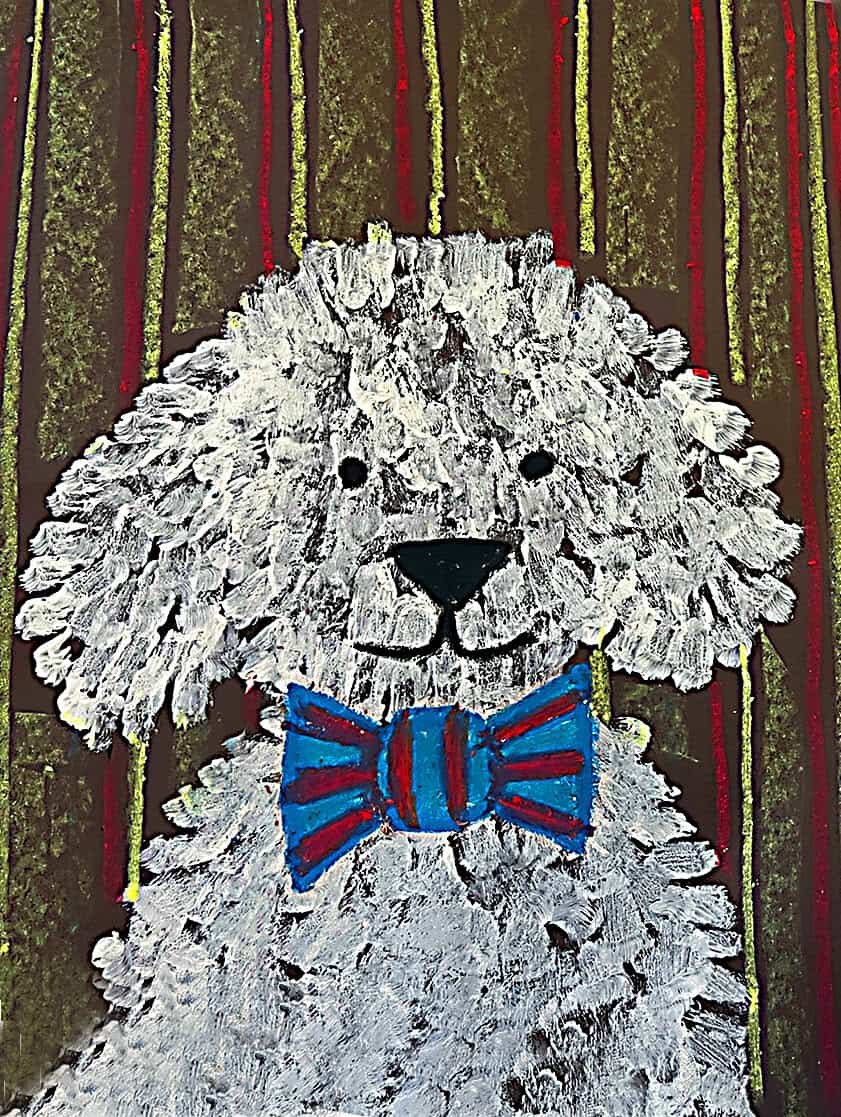
Fluffy Dog
This is my favorite painting lesson to teach texture to my youngest artists. We draw a very simple dog together as a guided drawing on colorful construction paper. Next, I demonstrate how to use a paintbrush to stamp the texture of fluffy fur on the dog. After the paintings are dry, my students draw a cute face and collar for their fluffy dog. Lastly, they use crayons to add a pattern behind the dog. The final paintings are so cute, and my little artists are always to proud of their dog portraits.

Scaly Fish
This is a fun stamping or printmaking lesson for young artists. I provide my 2nd grade artists with a fish idea sheet to help them draw a large fish on their paper. They use paint sticks to paint the fish with a variety of colors. Next, they use celery sticks dipped in paint to create the scales on the body of the fish. Then they use a second paper to create a background for the fish. Students use paintbrushes to paint waves of color then stamp bubble wrap and tubes to make bubbles. Once both paintings are dry, they cut the fish from the paper and glue it to the water background. This mixed media project uses so many great techniques.

Cute Cat
My 3rd grade students love the outcome of this lesson. I demonstrate how to draw a simple cat with shapes and provide them with a cute cat ideas handout for more creative problems solving. My students trace their pencils lines with construction paper crayons. Next, they use tempera cakes to paint the cat with bright colors. Lastly, the same crayons are used to add dashes to the the cat to create the illusion of fur. A texture rubbing is also added to the negative space around the cat. This is a great mix of implied texture and actual texture.
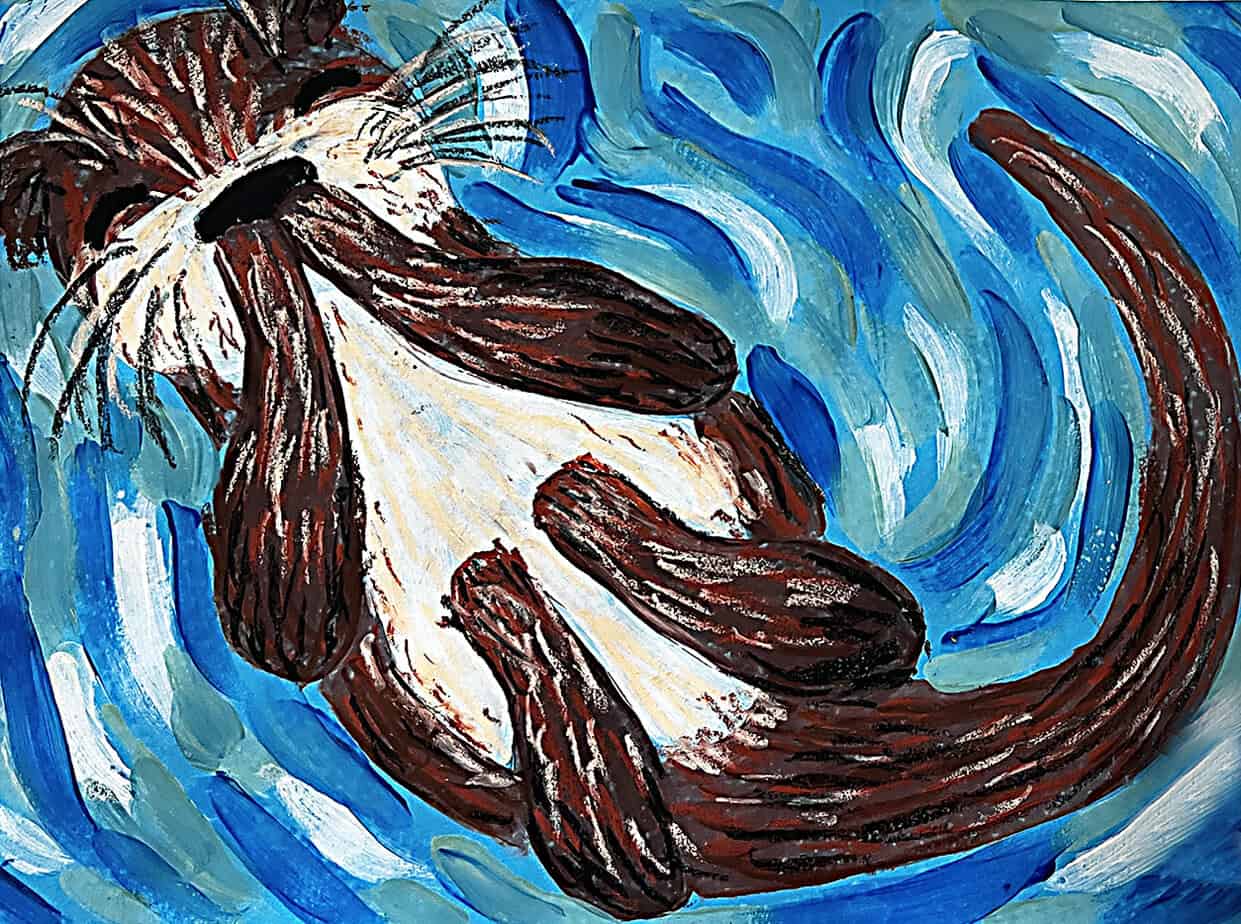
Floating Otter
This mixed media painting is perfect for my 4th grade artists. I do a guided drawing of an otter with my class. The otter in painted with brown and white, and the negative space around the otter is painted with dashes of green, blue and white to look like rippling water around the otter. Next, students use oil pastels to create the texture of fur on the otter. Then they also use oil pastels create additional details like eyes and a nose.
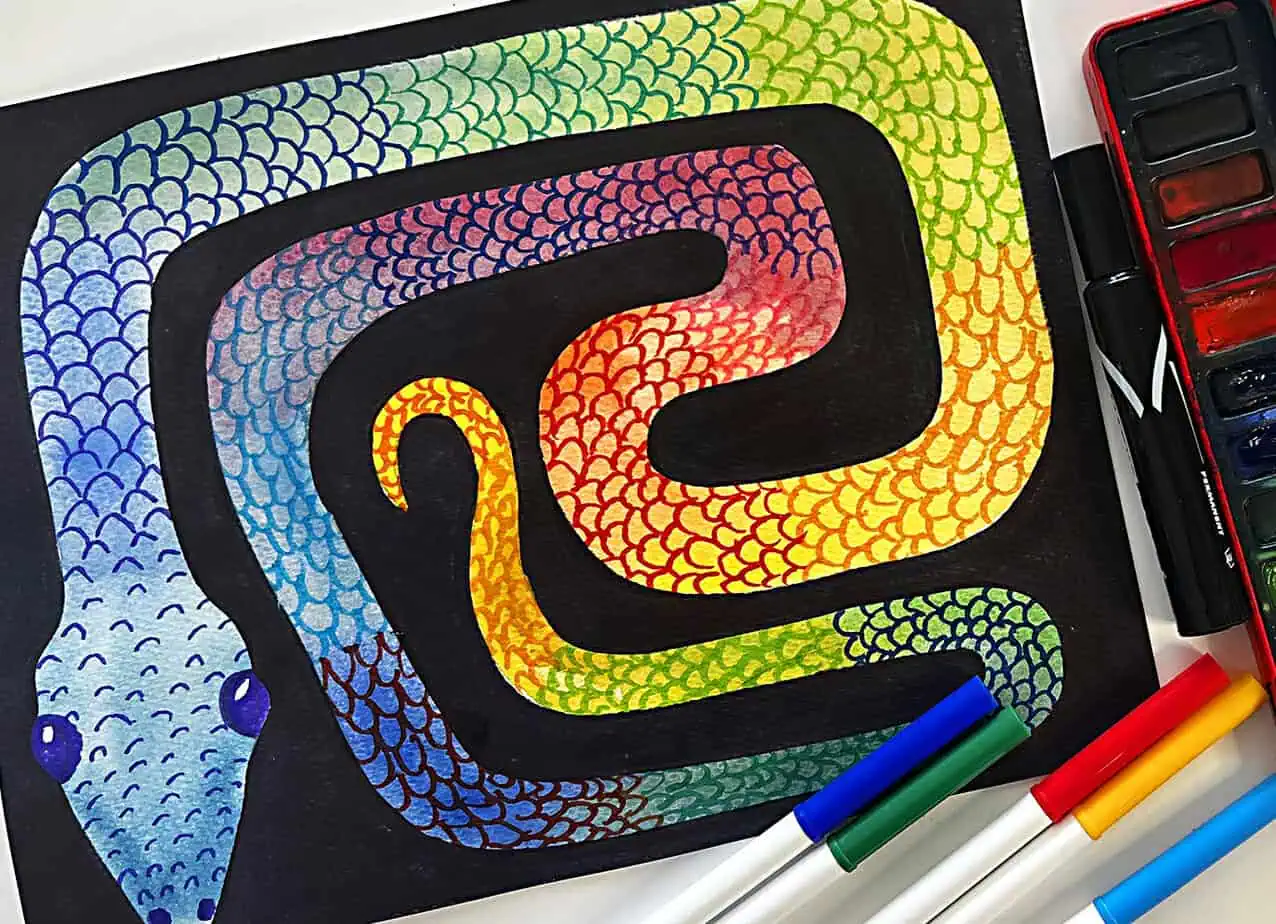
Scaly Snake
I use this lesson to teach implied texture and review the color wheel with my 5th grade students. I demonstrate how to draw a snake that fills the paper. Once the body is outlined with Sharpie, students add watercolors to the body of the snake in color wheel order. I encourage my students to use wet on wet to allow the colors to blend and create the intermediate colors. Lastly, once the snake is dry, my students use markers to add a scale texture to their snakes. Black paint or black marker is used to fill in the negative space and disguise any paint drips that may have occurred while painting.
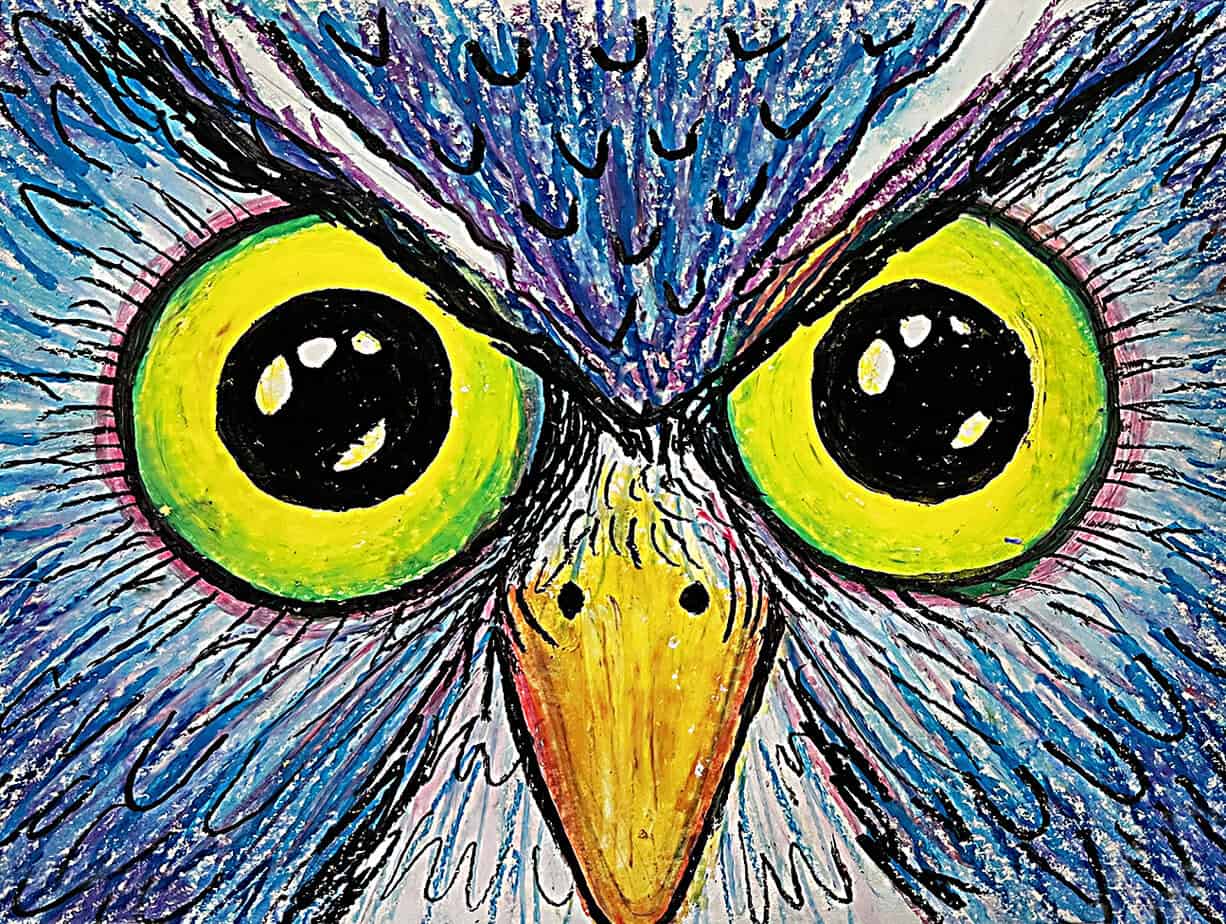
Texture Owl
I love this lesson for my 5th grade artists. They have so much fun layering and blending the oil pastels to create textures found in owls. They begin by drawing two large eyes in the center of the paper and then add the beak. Next, they use the side of the oil pastels to fill in large areas. It is easier to blend the oil pastels when they are applied in a thick layer. Using a white oil pastel or the lightest color, students blend the colors to create a smooth texture for the eyes and beak. Next, I demonstrate how to use mark making with the oil pastels to create the texture of the feathers around the eyes and beak. Students layer strokes of color to create highlights and shadows. The final results are stunningly realistic.
–
TEXTURE ART LESSONS FOR OLDER STUDENTS
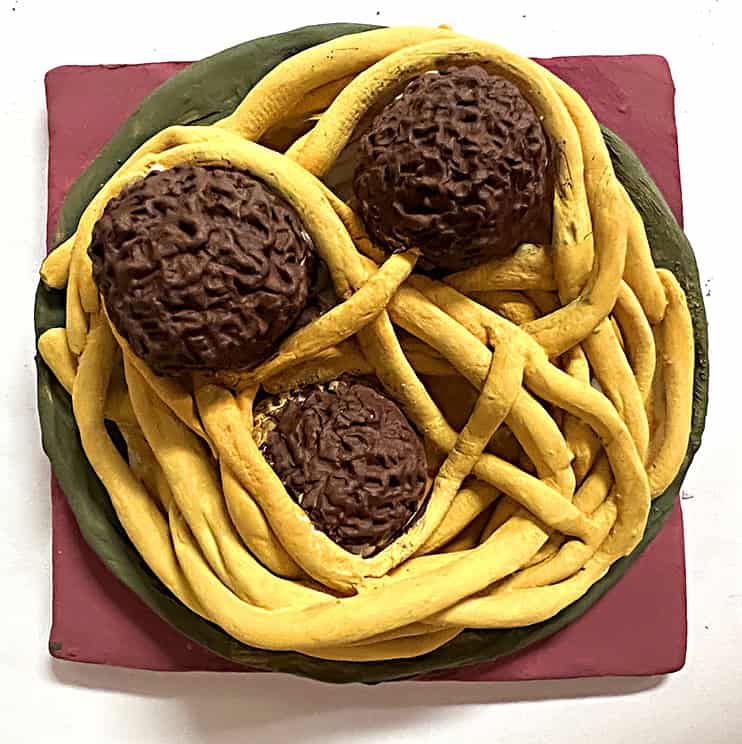
Clay Relief Sculpture
This middle school clay lesson is a great introduction to clay techniques while teaching students how to add texture to their clay sculptures. I provide my students with a square template and instruct them to create a clay slab tile. Next, they use slip and score to add clay, as well as subtract clay using clay tools. They problem solve to create a textured tile that has actual texture. We view the sculptures of Louise Nevelson and critique her assemblages and relief sculptures. The outcome of these relief sculptures is varied and allows for creativity. Check out the lesson here.
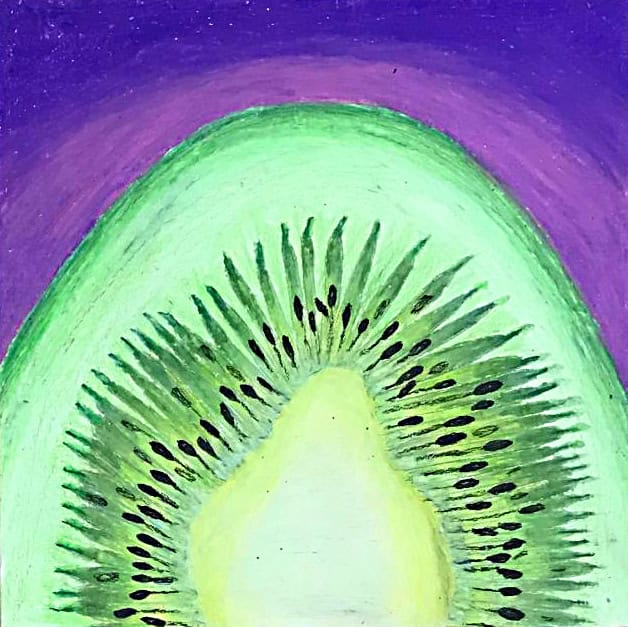
Close-Up Oil Pastel
I introduce my middle school students to the artwork of Georgia O’Keeffe and viewfinders in this oil pastel lesson. My students either use real objects (such as leaves, citrus or flowers) or printed images for this lesson. They place the viewfinders on the object to zoom in on the subject matter and study the textures they see. Then they draw the cropped image on a tag board. Next, I demonstrate how to use oil pastels to create implied textures and how to apply a thick layer of oil pastels to allow for blending and value creation. The textures in the final art pieces are amazing and lifelike. Check out my Oil Pastel lesson here.
Thanks for reading! – Trista
Related Posts:
Check out my Elements of Art Lessons and Ideas Page for posts like this.
I also have a post about How to Teach the Elements of Art
If you liked this Texture Art Lessons post, please subscribe by clicking here.